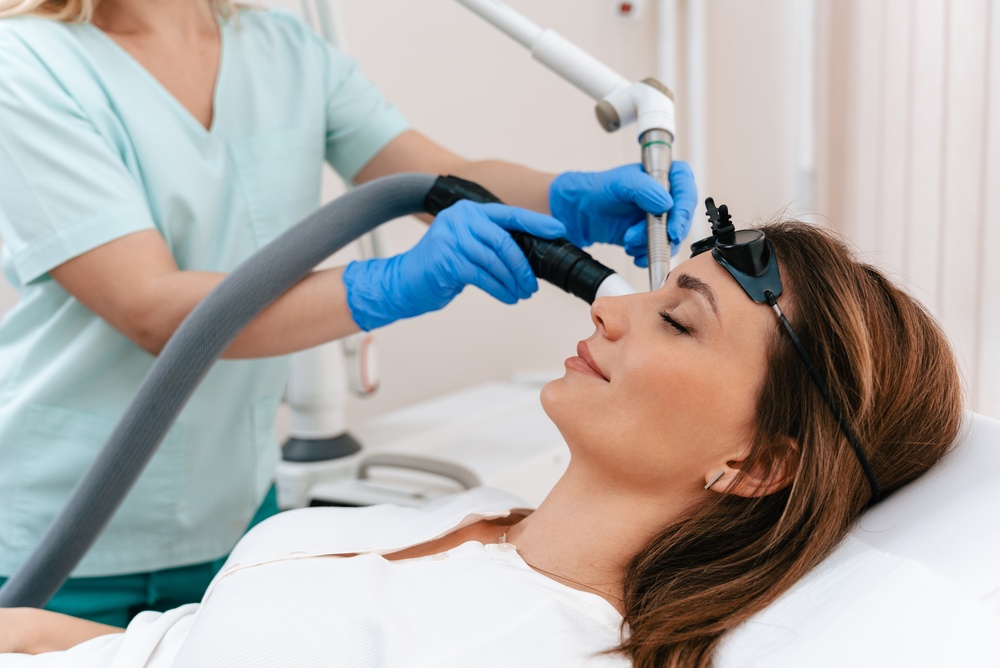
A practical guide to skin tightening and resurfacing for laxity, fine lines, sun damage and uneven texture
Skin aging rarely creates just one concern. A softer jawline may appear alongside fine lines, uneven tone, rough texture or sun damage. That is why choosing laser skin rejuvenation near McLean and Tysons Corner, VA should begin with what you want to improve, not the name of a device.
Non-surgical skin tightening and laser resurfacing address different layers and different signs of aging. Tightening treatments focus primarily on laxity and collagen support, while resurfacing treatments are generally used to improve tone, texture and visible surface damage.
Some patients may benefit from one approach; others may need a carefully sequenced combination.
Skin Tightening and Resurfacing Address Different Concerns
It is common to use the word laser for many cosmetic devices, but not every energy based treatment is technically a laser. Ultrasound, radiofrequency, radiofrequency microneedling, plasma and laser platforms deliver energy in different ways. The distinction matters because the right technology depends on the concern being treated, the depth of treatment and the patient’s skin.
What Skin Tightening Can Improve
Nonsurgical skin tightening is designed to encourage collagen remodeling beneath the skin. It may be considered when the face, neck or jawline has mild to moderate laxity, reduced definition or an early crepey appearance. Because collagen develops gradually, improvement is typically progressive rather than immediate.
These treatments cannot reproduce the degree of lifting possible with surgery. Significant skin laxity may require a surgical consultation, and a responsible treatment plan should set realistic expectations before treatment begins.
What Laser Resurfacing Can Improve
Laser skin resurfacing focuses more directly on visible skin quality. Depending on the platform and treatment depth, it may be used to address fine lines, rough texture, uneven tone, sun damage, age spots, enlarged pores and certain scars. Resurfacing also triggers a controlled healing response that can support collagen renewal.
Mild discoloration does not necessarily require the same procedure as deeper wrinkles or more pronounced textural change. A personalized evaluation helps determine how much treatment is appropriate and how much recovery time to expect.
Laser Skin Rejuvenation Options at Milani MedSpa
Milani MedSpa offers several technologies that can be selected according to the treatment area, skin concern and desired intensity. The options discussed in the original treatment guides include:
• Ultherapy PRIME Focused ultrasound energy is used to stimulate collagen at targeted depths and may be considered for nonsurgical lifting and tightening of areas such as the face, neck and jawline.
• Morpheus8 Radiofrequency energy is paired with microneedling to address collagen remodeling, skin laxity and texture.
• Potenza RF Microneedling Adjustable radiofrequency microneedling may be used for concerns involving laxity, texture and overall skin rejuvenation.
• Opus Plasma Fractional radiofrequency plasma creates controlled microinjuries to support resurfacing and collagen stimulation.
• Sciton HALO Hybrid fractional laser technology targets concerns such as fine lines, uneven pigmentation, texture and sun damage.
• Sciton TRL Tunable resurfacing allows treatment depth to be adjusted for more customized correction and recovery.
• Sciton BBL BroadBand Light is used for selected pigmentation, redness and uneven tone concerns; it is a light based treatment rather than a resurfacing laser.
No list can determine which treatment is best for an individual patient. Device selection should follow an in person assessment of skin type, medical history, treatment goals, previous procedures and tolerance for downtime.
How to Choose Between Tightening and Resurfacing
The simplest starting point is to identify the dominant concern.
• Choose a tightening conversation when the main concern is looseness, reduced firmness or a less defined face, neck or jawline.
• Choose a resurfacing conversation when fine lines, rough texture, scars, sun damage or uneven pigmentation are more noticeable.
• Discuss a combined plan when laxity and surface damage are both contributing to an aged or tired appearance.
Combination treatment does not always mean performing everything at once. Your provider may stage procedures so the skin has time to heal and so the response to each step can be evaluated. A thoughtful sequence can also help manage downtime and avoid unnecessary treatment.
What to Expect From Treatment and Recovery
The experience varies considerably by technology and intensity. Some energy based tightening treatments involve little visible downtime, while deeper resurfacing may produce several days or longer of redness, swelling, peeling, sensitivity or irritation. Ablative procedures generally require more recovery than nonablative treatments.
Results also develop on different timelines. Resurfacing may create visible changes after the initial healing period, while collagen remodeling from tightening treatments often continues over the following weeks and months. More than one session may be recommended, depending on the technology and treatment goal.
Before scheduling, ask how to prepare, what aftercare is required, when makeup and exercise can resume, and how sun exposure should be managed. Daily sun protection is especially important after resurfacing because healing skin can be more vulnerable to irritation and pigment changes.
Who May Be a Good Candidate
Adults with realistic expectations and mild to moderate laxity, visible sun damage, fine lines or uneven texture may be candidates for laser or energy based rejuvenation. However, candidacy depends on more than the concern itself.
Tell your provider about medications, active skin conditions, a history of cold sores, recent tanning, previous cosmetic procedures, pregnancy or breastfeeding, and any tendency toward abnormal scarring or pigment changes. Certain treatments may not be appropriate during an active infection or for some medical conditions. Skin tone can also influence device choice and treatment settings, making an experienced evaluation essential.
Questions to Ask During Your Consultation
• Which concern is this treatment intended to improve
• Why is this device appropriate for my skin type and goals
• How many sessions might I need
• What discomfort and downtime should I expect
• When should results become visible and how long may they last
• What risks are most relevant for my skin
• How should I prepare and care for my skin afterward
A clear consultation should leave you understanding both the expected benefit and the limits of treatment. Be cautious of promises that suggest a nonsurgical device can deliver a surgical result or permanently stop the aging process.
Plan Laser Skin Rejuvenation Near McLean and Tysons Corner
The strongest rejuvenation plan is not necessarily the most aggressive one. It is the plan that matches the technology to the actual concern, respects your skin and fits the amount of recovery you can realistically manage.
If you are considering laser skin rejuvenation near McLean or Tysons Corner, VA, call Milani MedSpa at 703-822-5924 or schedule a consultation online to discuss skin tightening, resurfacing and a personalized treatment plan.